
The cutting-edge technology of nutrient replenishment
Controlled Release Fertilizers (CRF) represent the most advanced and highest level of modern plant nutrition. These products provide the necessary nutrients evenly and safely according to the needs of the plant over several weeks, months, or even multiple growing cycles. Read more »



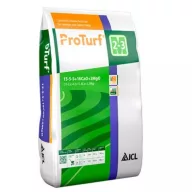
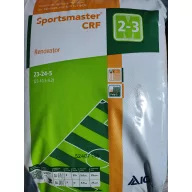
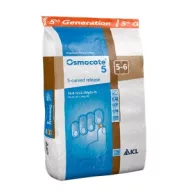
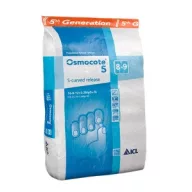
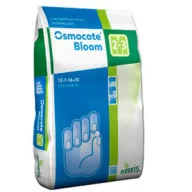
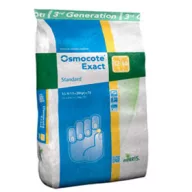
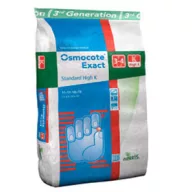
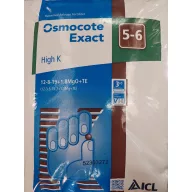
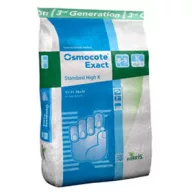
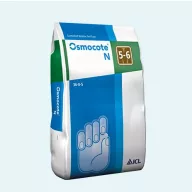
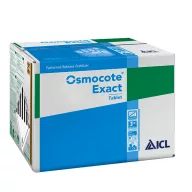
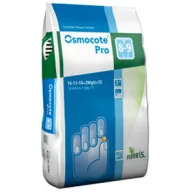
Why is coated fertilizer special?
The special plant resin coating or polymer coating on the fertilizer granules is responsible for the gradual release of nutrients, the rate of which depends solely on the soil temperature. This way, nutrient release is perfectly synchronized with the plant’s root activity and growth rate.
Why is coated fertilizer the best choice?
1. Varied, long-lasting effect – up to 12-14 months
The thickness of the coating determines how long it releases nutrients:
• Short duration: 6–8 weeks
• Medium duration: 3–6 months
• Long duration: 8–14 months
This allows fertilization to be done as little as once a year, which is a huge advantage, for example, in ornamental plant production or fruit plantations.
2. Safe and even nutrient supply
Nutrients are not released all at once, but continuously. As a result:
No scorching
No salt accumulation
No leaching
No nutrient deficiency or overdose
The plant gets exactly what it needs, exactly when it needs it.
3. Works excellently on different soil types
The controlled nutrient release technology is especially effective:
• on sandy soils, where nutrients are easily leached,
• in potted or container cultivation, where salt accumulation can be a serious problem,
• for salt-sensitive plants (e.g. fuchsia, water fuchsia, tuberous begonia, lobelia, ferns).
4. High technological standard
Products such as Osmocote Exact, Osmocote Pro, or the latest Osmocote 5 provide pre-programmed, scheduled nutrient release. These fertilizers can provide less nutrients during the initial rooting phase and more during intensive vegetative growth.
What types of Osmocote are there?
The Osmocote product family is one of the best-known brands in modern horticultural production and hobby gardening, and is a market leader in controlled release fertilizers (CRF).
Osmocote products are basically divided into two main categories, targeting professional large-scale use (horticultural operations) and hobby use (retail for the general public):
1. Professional product lines
These products are specifically developed for nurseries, greenhouses, and professional growers, where precise, controlled, and reliable nutrient release is essential.
The Osmocote Exact product line represents the top of the brand, offering the highest reliability and safety. It has two subtypes, depending on the release profile:
• Osmocote Exact Standard provides uniform, linear nutrient release throughout the entire duration, ideal for crops requiring constant growth.
• Osmocote Exact DCT (Double Coating Technology) uses double coating technology, adjusting nutrient release to growth phases. It is available with High Start (higher dose at the beginning of growth) and High End (concentrated at the end of the season) release profiles.
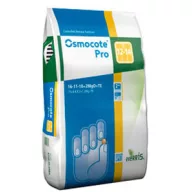
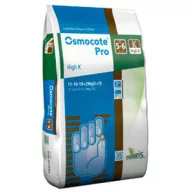
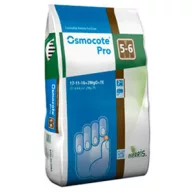
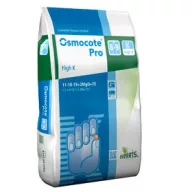
Osmocote Pro is a second-generation, cost-effective professional product line. It also contains coated NPK and micronutrients, and is well suited for use in combination with liquid feeding, where part of the nutrient supply is covered by this coated fertilizer.
Osmocote 5 is the brand’s latest, fifth-generation product, integrating new technologies (such as the OTEA system for optimal micronutrient uptake), promising even more precise and efficient nutrient release, especially during critical growth phases.
What compositions of Osmocote products are available?
The different Osmocote types are available in a wide variety of compositions, providing targeted solutions for the different nutrient needs of plants by varying the ratios of nitrogen (N), phosphorus (P), and potassium (K).
1. High nitrogen (N-emphasized) formulas (e.g. Osmocote Pro NPK 19-9-10) are used to stimulate vegetative growth, develop foliage, and enhance green color intensity.
2. High potassium (K-emphasized) formulas (e.g. Osmocote Exact High K NPK 12-7-19) are used to support flowering and fruiting, as well as to increase plant resistance.
3. Balanced or standard compositions (e.g. Osmocote Exact Standard NPK 15-9-12) provide the nutrients needed for harmonious development throughout the entire growing season, where there is no extra need for either nitrogen or potassium.
The varied NPK compositions help select the most suitable Osmocote product for the plant and the desired growth goal.
2. Hobby coated product lines
Products intended for home use are generally optimized for the needs of a specific plant group and are available in simple, user-friendly packaging. These are typically set for an effect duration of about 5-6 months.
Formulas tailored to plant types contain specific NPK ratios and micronutrient compositions, serving the needs of certain plants in a targeted way. Examples include versions developed for balcony and houseplants, roses and flowering plants, berries and other fruits, or for boxwood, thuja, conifers, and hedges.
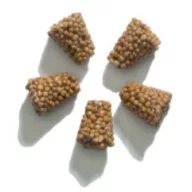
A special product is the Osmocote Tablet, which can be conveniently used by both professional and hobby gardeners. In these, the fertilizer granules are compressed and glued into a cone-shaped tablet with a biodegradable adhesive. These can simply be inserted into the soil of a pot or balcony box, allowing nutrients to be replenished later as well.
What is the difference between slow and controlled nutrient release?
1. Slow-release nutrient release
Slow-release fertilizer (SRF) granules do not use coated granules, but the nutrients inside are chemically formulated not to dissolve quickly in water. The release process occurs through slow hydrolysis (chemical reaction with water) and/or the activity of microorganisms in the soil. Examples: Urea-Formaldehyde (UF) or Isobutylidene Diurea (IBDU). The rate of nitrogen release depends on soil temperature and microbial activity in the soil. Their effect lasts longer than regular fertilizers, but is not as precise as coated (controlled) fertilizers.
2. Controlled nutrient release
Controlled release (CRF), coated fertilizers have their nutrient granules protected by a resin or polymer layer to prevent rapid release. This coating prevents the sudden release of nutrients, provides a uniform, months-long effect, and protects developing, weak roots from salt stress often caused by sudden nutrient release. The rate of nutrient release depends solely on soil temperature: in warm soil, release is faster; in cool soil, it is slower or may not occur at all. Thus, it always matches the plant’s needs, since root activity is also temperature-dependent.
How does controlled nutrient release work?
Water in the soil enters under the semi-permeable resin coating surrounding the fertilizer granules by osmosis (hence the name Osmocote) and dissolves them. This creates higher pressure inside the coating, causing the dissolved nutrients to slowly diffuse into the soil. The release rate depends mainly on soil temperature: the warmer it is, the faster the release. This ensures that more nutrients are available to the plant during the growth phase. CRF technology allows nutrients to be available evenly throughout the entire growing season with a single application.
For which plant cultures can coated fertilizers be used?
Depending on the duration of effect, coated fertilizers can be used for valuable crops with shorter or longer growing periods, or for permanent crops (plantations).
In ornamental plant production (container, open field, greenhouse): the most widely used forms here are Osmocote and Basacote.
Fruit and grape plantations: here, Agroblen offers a professional solution for young plantings and productive plantations.
Frequently Asked Questions (FAQ)
1. What does controlled release fertilizer offer over traditional fertilizer?
It supplies nutrients evenly for months, with no scorching and no leaching.
2. Does it require frequent watering?
It works with normal watering; water only helps penetrate the coating.
3. Can it be used for potted and container plants?
Yes, in fact, this is one of its main uses.
4. What does a 3–4–5–6 month or 12 month duration mean?
This is how long it provides stable nutrient supply at 21 °C soil temperature.
5. Is there a suitable coated fertilizer for every plant species?
Yes, you can choose from nitrogen- or potassium-dominant, micronutrient, or balanced compositions.