
Sweet, spicy Hungarikum
Paprika is one of the most popular and versatile garden vegetables: it is excellent for fresh consumption, cooking, pickling, or even as a spice. It is a staple vegetable in Hungarian cuisine, and there are many Hungarian-bred paprika varieties available. Read more »

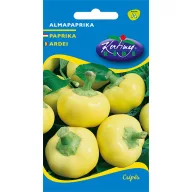
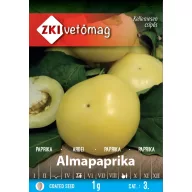
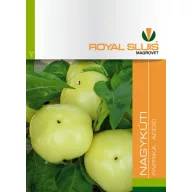
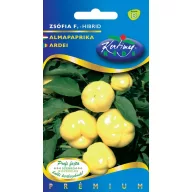
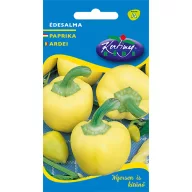

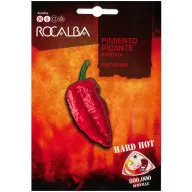
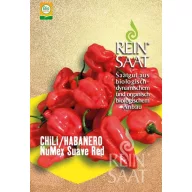
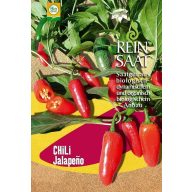
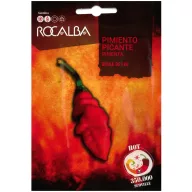
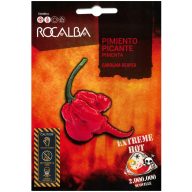
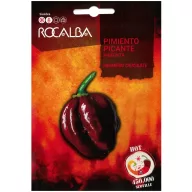
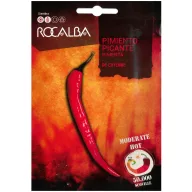

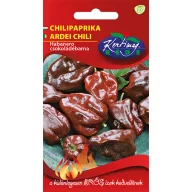
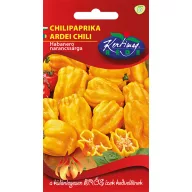
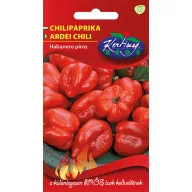
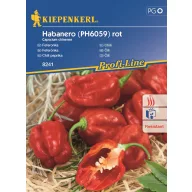
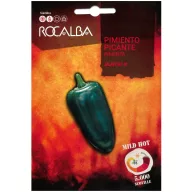
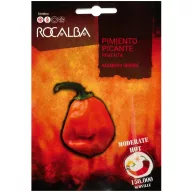
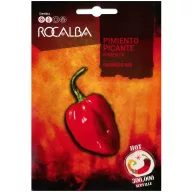
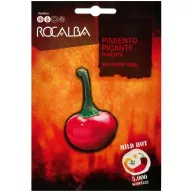
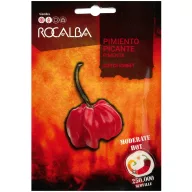
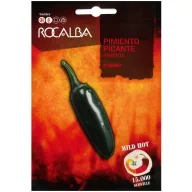
Growing from seed allows you to choose from many varieties — sweet, hot, large-fruited, compact bushy, or long classic types — and you control every aspect of cultivation. Moreover, starting from seed is cost-effective, with good quality seeds you can plan for the long term, and you can tailor the cultivation to your own taste.
Pepper varieties are extremely rich and diverse, and can be grouped according to several criteria, most commonly by fruit shape, taste, and use.
The most important categories and variety types
1. Grouping by use type and taste
Table peppers
These varieties are the most common in the kitchen, for fresh consumption, cooking, baking, or in salads. Table peppers typically have a sweet or only mildly hot flavor profile and are found in many forms in the kitchen.
Stuffing pepper (white pepper): this variety type is the best known and most commonly grown in Hungary. It is typically conical in shape, thick-fleshed, and harvested in a greenish-yellow (white) color. It is excellent for stuffed peppers, but also ideal for fresh consumption. The best-known variety names include Tizenegyes, Bihar, Rapides, Bogyiszlói, HRF.
Block or blocky pepper (California pepper): this type is larger, thicker-fleshed, and characteristically square (block) or rounded in shape. When ripe, it is red, yellow, or orange, but is often harvested green as well. Its taste is sweet, and its crunchy texture makes it excellent for salads and stir-fry dishes (e.g. California Wonder, Szentesi Blocky, King Arthur F1).
Kapya pepper: An elongated, slightly flattened, pointed-end variety, which is best when roasted, grilled, or baked due to its thick flesh. When ripe, its color is deep red and its taste is distinctly sweet (e.g. Kurtovszka kapija, Kaptur F1, Kaprina F1, Szentesi kápia).
Tomato pepper: as the name suggests, the fruit is flattened, mushroom- or tomato-shaped. The flesh is very thick. It is mainly used for pickling and preserving (e.g. Cececi Gömb, Tétényi Rekord, Kapitány F1, Pritamin F1, Piroska F1, Rubin F1).
Hot peppers (Chili)
These varieties are hot due to a compound called capsaicin. The scale ranges from mildly hot to extremely strong, indicated by the Scoville scale (SHU).
Mildly hot: this includes round Cherry pepper types or milder Jalapeño varieties. These are ideal for those who like mild spiciness.
Medium hot: the well-known Jalapeño, Serrano, and Cayenne peppers belong here, which already give a definite heat to dishes.
Extremely hot: in this category we find the very hot Habanero and Scotch Bonnet varieties, as well as the hottest record holders such as the Carolina Reaper, which require special caution when handling.
Spice peppers
Spice peppers are specifically bred to give intense color, flavor, and aroma to dishes after drying and grinding. The fruits are thin-fleshed, which helps quick drying, and they have a high pigment content. Hungary is a leader in spice pepper breeding, with research institutes in Szeged and Kalocsa. The non-hot (sweet noble) spice pepper is a Hungarian invention, a Hungarikum. Due to local growing conditions, there are different-tasting Kalocsa, Cece, or Szeged spice pepper landraces, as well as modern, resistant hybrids (e.g. Kalocsai V-2 F1, Kalocsai Rubin F1, Cédrus F1, Délibáb F1).
2. Grouping by growth type
Pepper growth is less divided into indeterminate and determinate types as with tomatoes. Instead, the shape of the bush and growth vigor are decisive:
Determinate type
Short growing season, compact bush, recommended for open field (e.g. most spice peppers).
Indeterminate type
Tall, wide-growing varieties that require support. Long growing season, suitable for forcing or open field cultivation with support (e.g. most blocky and kapya peppers, as well as many table hybrids for forcing).
2. Grouping by color at maturity
Although most peppers are first harvested green (white/yellow), their ripe color can be:
• Red: the most common ripe color (e.g. blocky, kapya, spice peppers).
• Yellow/orange: (e.g. yellow California, orange Habanero).
• Brown/black: dark-colored varieties, rarer (e.g. Chocolate Habanero).
• Purple: (e.g. purple-colored California varieties).
Frequently Asked Questions (FAQ)
1. When is the best time to sow pepper seeds for seedlings?
The ideal sowing time in Hungary is late February to early March if you want to grow seedlings indoors. Slow-growing chilis can be sown as early as late January. For germination, keep at 25–28 °C, while at the cotyledon stage 22–24 °C daytime temperature is sufficient, and more developed (4–8 leaf) seedlings require 20–22 °C during the day.
2. How deep should the seeds be planted?
Sow the seeds shallowly — about 0.5–1 cm deep — lightly covered with soil.
3. When can the seedlings be planted outdoors?
Only when the risk of frost has passed and the soil + night temperature is consistently warmer — usually at the end of May. Peppers are particularly heat- and light-demanding plants. They can be planted outdoors when the night temperature is consistently above 12–14 °C.
4. How water- and nutrient-demanding are peppers?
Peppers require regular watering, well-drained soil, and nutrient-rich earth, especially during growth and fruit set.
5. Are peppers good for balconies or pots?
Yes! Compact, bushy varieties are especially suitable for growing on balconies or in containers, provided there is enough light and care.