
Fast and efficient nutrient supplementation through the leaves
Foliar fertilization is one of the most important and effective nutrient replenishment methods in modern crop production, where nutrients are applied directly to the foliage. The nutrients absorbed through the leaves are utilized extremely quickly: depending on the plant species and developmental stage, they can be 8–20 times more effective than nutrients absorbed through the soil. Therefore, foliar fertilizer is one of the best tools for treating nutrient deficiencies that require rapid intervention, improving crop quality, and increasing stress tolerance. Read more »


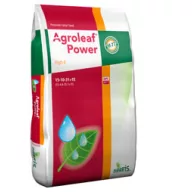


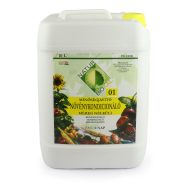


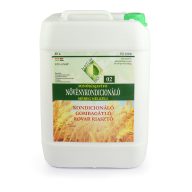


What can I find here?
In this category, you will find premium quality foliar fertilizers, which are recognized products among both professional and hobby growers.
Why is it worth using foliar fertilizer?
Foliar fertilization improves the plant’s overall physiological functioning:
• photosynthesis and respiration intensity increase,
• enzyme system activity is stimulated,
• the chemical-physical state of the cells changes favorably,
• root activity improves, so the amount of nutrients that can be absorbed from the soil also increases,
• stress effects decrease (heat, cold, salt stress, drought, damaged roots, etc.),
• fruit set improves, yield and crop quality increase.
Foliar fertilizer is an excellent solution in case of unfavorable soil conditions, excessive binding, cold soil, high pH, or underdeveloped root systems, when nutrient uptake from the soil is hindered.
Which foliar fertilizer should you choose?
Plants require different nutrients in different phenological stages:
• During leaf development: products with higher nitrogen content (e.g. NPK 31–11–11).
• During fruit set and ripening: potassium-dominant types (e.g. NPK 15–11–30).
• For root strengthening after transplanting, during tuber formation: high phosphorus content formulas (e.g. NPK 12–52–5).
• On sandy soils: magnesium and sulfur supplement formulas (e.g. NPK 10–5–10 + 16MgO + 32SO₃).
• For general use: balanced nutrient content foliar fertilizers (e.g. NPK 20–20–20).
Quality foliar fertilizers contain chelated microelements in addition to macroelements, which are maximally utilized by the plant. Premium products also contain biostimulants and substances that enhance adhesion and effectiveness, ensuring better adherence and rapid effect on the leaf surface.
When is foliar fertilization especially justified?
• in growth stages with high nutrient demand,
• after transplanting, when roots are still weak or barely present,
• in cold, airless, or excessively compacted soils,
• in high pH soils,
• during summer drought,
• in case of nutrient antagonism (e.g. too high Ca, Mg, etc.),
• in all cases when nutrient uptake from the soil is hindered.
Foliar fertilizer can be used in all horticultural and field crops, even several times during the growing season.
Rules for effective foliar fertilization
• Spray only in windless weather!
• There are more stomata on the underside of leaves, so use a fine mist, high-pressure sprayer to ensure the solution reaches there as well.
• Above 26 °C, nutrient uptake through the leaf deteriorates, so perform foliar fertilization early in the morning, when the foliage is still dewy and cooler.
• A wet leaf surface helps nutrients enter.
• Most foliar fertilizers — except those containing copper — can be mixed with plant protection products, so they can be applied in one go.
• For perennial plantations (vineyards, orchards), soil testing and leaf analysis are also recommended to select the appropriate composition.
Frequently Asked Questions (FAQ)
1. How quickly does foliar fertilizer work?
The active ingredients are incorporated into the plant’s system within 24–48 hours, so deficiency symptoms can be corrected very quickly.
2. How does the plant absorb foliar fertilizer?
The plant absorbs foliar fertilizer through tiny stomata on its leaves and through the cuticle on the leaf surface, from where the nutrients quickly enter the cells and reach the plant’s entire tissue system.
3. Can foliar fertilizer be used as a substitute for soil fertilization?
Not completely, but it is an excellent supplementary method: the two together provide the strongest effect.
4. When is it worth spraying foliar fertilizer?
Early in the morning or late in the evening, when the temperature is low and humidity is high.
5. Can foliar fertilizer be mixed with plant protection products?
Yes, most foliar fertilizers can be mixed well with plant protection products, except for copper-containing products, since foliar fertilizers also contain enough copper.
6. How often should foliar treatment be repeated?
Depending on the crop and the problem, every 7–14 days, or as recommended by the manufacturer.