
Neat, aesthetic, and well-structured garden made simple
With the help of bed borders and bed frames, you can easily create different parts of your garden: flower and vegetable beds, walkways, lawns, or decorative garden sections. Our selection includes borders made of plastic, rubber, metal, and natural materials, so you can find the right solution for every garden style. Read more »







What can I find here?
Plastic garden edging – versatile, easily shapeable solutions
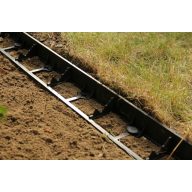
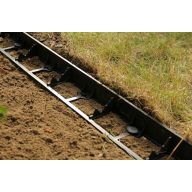
Plastic garden edgings are extremely popular because they are easy to install, weather-resistant, and available in many forms.
Available options:
• flexible or rigid design,
• wavy or straight edge,
• green, brown, or black color,
• height between 10–20 cm, as needed.
Primary uses:
Separating different garden areas – for example, marking the boundaries between lawn and flower bed, vegetable patch and walkway, or mulched and paved areas.
(Note: for separating lawn and pavement, it is better to choose concrete or galvanized metal edging.)
ABS plastic garden edging – extra durability, extra resistance
Garden edging made from ABS plastic has excellent dimensional stability, is impact-resistant, does not shrink, and withstands extreme weather – both cold and heat.
Advantages of flexible types:
• easily bendable, ideal for marking curves,
• simple installation,
• it is recommended to place them at ground level during installation to avoid waviness,
• supporting them with wire pegs or wooden stakes is recommended.
Rigid garden edging – clean lines, defined edges
Rigid plastic garden edging is an excellent choice for straight or well-defined boundaries, but curves and circles can also be created by cutting the stiffening ribs with pruning shears.
Characteristics:
• 5–7 cm height
• 1 m elements
• ground stakes are available for several types
Decorative garden edging – natural and spectacular solutions
If appearance is as important to you as practicality, you can choose:
• perforated metal garden edging with modern or classic motifs,
• bamboo edging,
• wicker edging,
• or other natural-looking, aesthetic solutions.
These fit perfectly in ornamental gardens, romantic or nature-inspired garden styles.
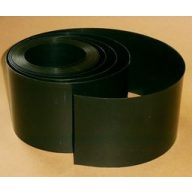
Root barrier – protection against aggressive root systems
When planting plants with strongly spreading roots (such as bamboo), the use of a root barrier or root trap is essential.
Advantages and role:
• prevents uncontrolled spreading of plant roots,
• protects underground drainage pipes, channels, cables,
• helps keep plants under control.
Installation recommendation:
• at least 70 cm deep installation is required,
• some types are available with steel connectors to ensure continuity.
Frequently Asked Questions (FAQ)
1. What garden edging should I choose for flower beds?
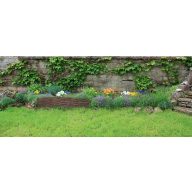
For flower and ornamental beds, plastic or natural material (bamboo, wicker) edgings offer an aesthetic and flexible solution.
2. Is flexible or rigid plastic garden edging better?
• Flexible: recommended for curves, winding bed shapes.
• Rigid: ideal for straight, clean lines, but with proper preparation, curves can also be formed from it.
3. What should I pay attention to when installing plastic edging?
It is important to place the edging stably at ground level to prevent waviness. Always ensure support – with pegs, stakes, or ground spikes.
4. Is plastic garden edging good for separating lawn and pavement?
Not recommended. For this purpose, concrete or galvanized metal edging provides a long-term, stable solution.
5. Why is a root barrier necessary when planting bamboo?
Bamboo roots spread quickly and aggressively, and can damage nearby pipes and structures. The root barrier safely keeps the plant under control.