
Tanks, cans, and demijohns – reliable storage from harvest to the finished beverage
The production of quality wine and pálinka begins with the harvest, and all the way to bottling, you need tools that ensure proper collection, storage, and fermentation.
In this category, you’ll find everything you need from grape processing to aging drinks: tanks, cans, demijohns, fermentation vessels, and wine taps, in various sizes and designs. Read more »
Filter
Product status
All products in category23
Product
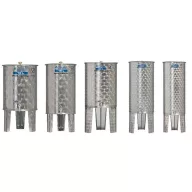
Pickup only
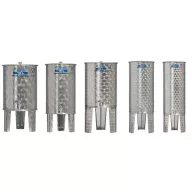
Pickup only
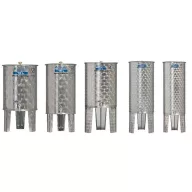
Pickup only
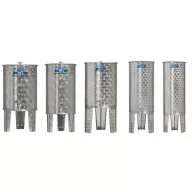
Pickup only
Pickup only
Pickup only
Pickup only
Pickup only
Pickup only
36 437 Ft
74 981 Ft
91 440 Ft
9 648 Ft

Ideiglenesen nem kapható
Not available for purchase!

Ideiglenesen nem kapható
Not available for purchase!

Ideiglenesen nem kapható
Not available for purchase!

Ideiglenesen nem kapható
Not available for purchase!

Ideiglenesen nem kapható
Not available for purchase!

Ideiglenesen nem kapható
Not available for purchase!
Ideiglenesen nem kapható
Not available for purchase!
Ideiglenesen nem kapható
Not available for purchase!
In today’s modern wineries and home workshops, stainless steel (inox) and plastic tanks are increasingly coming to the fore, as they are easy to clean, durable, and provide a reliable environment for beverages.
What can tanks and cans be used for?
For harvesting
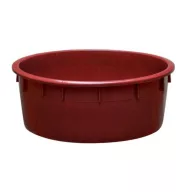
In the past, grapes were collected in baskets and carried to the processing and pressing site, i.e., the cellar. Today, using plastic crates or tank crates is much more convenient and efficient. These are suitable for quickly and safely moving harvested grapes, minimizing damage to the bunches.
For fermentation
Nowadays, wine fermentation mostly takes place in stainless steel (inox) tanks, which are easy to clean, do not impart off-flavors to the wine, and provide a stable temperature environment.
You can choose:
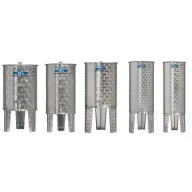
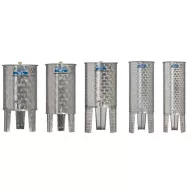
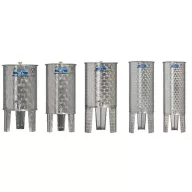
• a paraffin floating-lid tank, which protects the wine from oxidation by adjusting to the wine level,
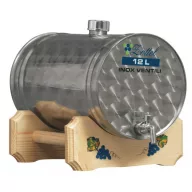
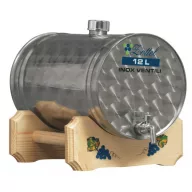
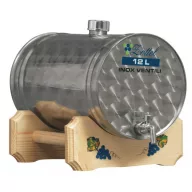
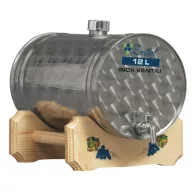
• a horizontal tank on a wooden stand,
• fermentation vessels of various sizes for smaller batches.
For storage and serving
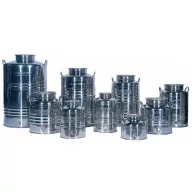
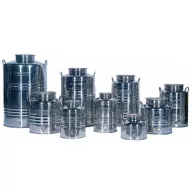
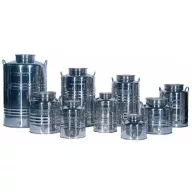
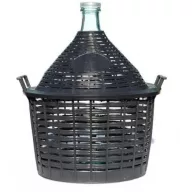
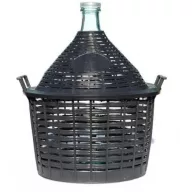
Inox cans and brandy tanks with taps not only make storage convenient but also provide an aesthetic way to serve homemade wine or brandy. For storing smaller quantities of beverages, classic glass demijohns are ideal, which can be safely kept in a well-ventilated cellar or even in the pantry or storage room.
FAQ – Frequently Asked Questions
1. What kind of tank should I choose for wine fermentation?
Inox (stainless steel) tanks are the most common: they are easy to disinfect, durable, and do not react with the wine. It is worth choosing a floating-lid version if the amount of wine varies.
2. What is the purpose of the floating lid?
The paraffin floating lid floats on the surface of the wine, reducing oxidation and protecting the beverage from contact with air. It is especially practical in smaller cellars, where the tank is not always full, as wine is occasionally drawn from it.
3. How does an inox can differ from a regular plastic can?
Inox cans:
• are food-grade,
• have a lower chance of odor and flavor transfer,
• are more durable,
• are aesthetic and suitable for serving.
Plastic cans are more recommended for transport. Afterwards, it is advisable to transfer the alcoholic beverage into a glass vessel (demijohn, bottle) for storage.
4. How should I store homemade brandy or wine in a demijohn?
In a cool, dark place (cellar, pantry, storage room). It is advisable to seal it with a cork or a special breathable plastic stopper, or a glass stopper, to prevent oxidation.
5. What size tank might I need?
As a general rule, the fermentation tank should never be completely full – leave space for foaming during fermentation.
• For small batches, 10–30 liters,
• For medium-sized home winemaking, 50–150 liters,
• For larger quantities, a 200-liter or larger tank may be needed.
6. What is the difference between narrow-necked and wide-necked demijohns?
• Wide-necked: easier to clean, can also be used for mash.
• Narrow-necked: ideal for long-term storage of wine and brandy.
7. What is the purpose of a horizontal (wooden stand) tank?
It is easy to tap, stable, and easily accessible. It has a traditional feel but is made of modern, cleanable material.