
Alcohol meters, must meters, airlocks, and measuring instruments – everything you need for precise fermentation
One of the foundations of successful winemaking and distillation is accurate measurement. The sugar content of the must or mash, the fermentation process, and hygienic conditions all determine the final result. Alcohol meters, must meters, mash meters, airlocks, as well as measuring jugs and cylinders help with this. Read more »

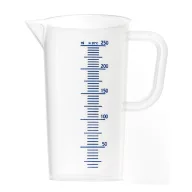
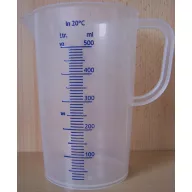

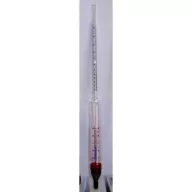
These tools are indispensable companions not only for professionals but also for hobby winemakers and distillers – because without accurate data, there is no stable fermentation and no predictable quality.
Why is accurate measurement important?
The most important quality indicator of must is its sugar content, or must degree, which reflects the result of a year’s work in the vineyard and cellar. The sugar content also determines the expected alcohol content, so correct measurement is crucial from the very first moment of processing.
The sugar content of must is measured with a must meter, while the sugar content of fruit mashes can be measured with a mash meter.
The mash meter shows the sugar degree of the fermenting juice of any fruit (apple, pear, cherry, plum, quince, etc.), thus helping to predict the expected alcohol yield.
The role of airlocks in fermentation
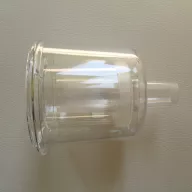
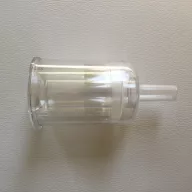
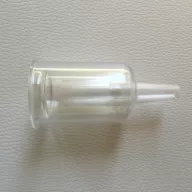
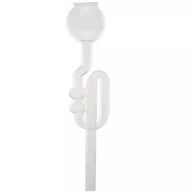
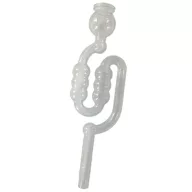
The task of the wine and mash airlock is to release the carbon dioxide produced during fermentation, while preventing air from getting back into the fermenting vessel. Air can cause oxidation and undesirable spoilage processes.
A well-functioning airlock ensures that a so-called "carbon dioxide cushion" forms above the fermenting must, which is a naturally formed protective layer on the surface of the liquid (such as must or fruit mash), preventing contact with oxygen and damage. The excess carbon dioxide escapes with a characteristic, quiet bubbling sound. This is where the device gets its name.
Airlocks can be made of glass or plastic and are available in various sizes and shapes.
Attention! The accumulation of carbon dioxide (commonly called must gas) in the cellar is extremely dangerous because it displaces oxygen from the air, which can quickly lead to suffocation and death.
FAQ – Frequently Asked Questions
1. What does the must meter measure and what does the mash meter measure?
The must meter shows the sugar content (must degree) of grape must.
The mash meter measures the sugar degree of fruit mashes (apple, pear, plum, etc.).
2. Why is it important to measure the sugar content of must or mash?
The sugar content determines the expected alcohol content and the course of fermentation. Without accurate measurement, it is difficult to predict the outcome.
3. How does an alcohol meter differ from a must meter?
The alcohol meter is used to measure the alcohol content of finished or nearly finished wines and spirits, while the must meter and mash meter measure sugar content before or during fermentation.
4. What is a measuring cylinder or measuring jug used for?
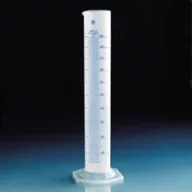
These are used for the correct use of meters: they provide the right amount of sample and guarantee accurate readings.
5. How does an airlock work?
The airlock contains water, which acts like a valve to let out carbon dioxide but does not allow air filled with oxygen to return. This way, fermentation takes place in an oxygen-free, safe environment.
6. Should I choose a glass or plastic airlock?
The glass airlock is durable, hygienic, and a classic tool, while the plastic airlock is lightweight, shatterproof, and, not least, affordable. Both are suitable; the choice is more a matter of usage habits.
7. How often should the sugar content of must or mash be measured?
It is recommended to check occasionally during fermentation, especially in case of problematic or slow fermentation.
8. What basic winemaking tools does a hobby winemaker need?
A must meter or mash meter, a measuring cylinder, and a suitable airlock are the minimum equipment if you want to make good quality wine or spirits.