
"Golden apple" from your own garden, balcony
The tomato is one of the most popular vegetable plants, which everyone likes very much, and children also enjoy eating it. It comes in an extremely wide variety of colors and appearances, and its uses are also very diverse. It is extremely rich in nutrients and vitamins, sweet, and can even be eaten as a snack. Read more »
Filter
Manufacturer
Cultures
Availability
Product status
All products in category103
Product

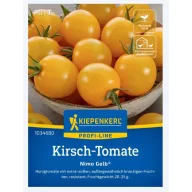
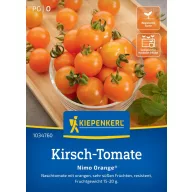
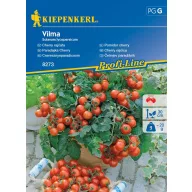

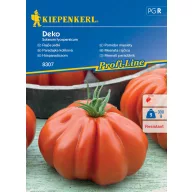
1 991 Ft
326 Ft
1 067 Ft
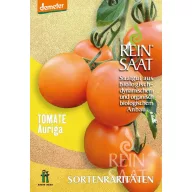

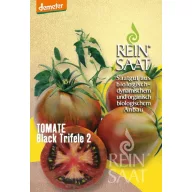




All products in category103
Product
You can choose from early or late-ripening, bush or indeterminate varieties according to the size of your garden. Even if you only have a terrace or balcony available for cultivation, you will still find a suitable variety. Growing your own tomato seedlings is also very cost-effective, and you can try many different types, from traditional canning tomatoes to cherry, oxheart, or San Marzano types, in yellow, tiger-striped, or even black colors. It is highly recommended for beginners as it germinates and produces reliably.
What types of tomato varieties are there?
Tomato varieties are extremely diverse and can be classified according to several criteria. Below we present the most important categories by which the types can be distinguished.
1. Classification by growth type
This is the most common and, from a horticultural point of view, one of the most important classifications.
• Indeterminate varieties:
The main shoot of the plant grows continuously until frost, constantly producing new flower clusters and fruits.
They require support (stake, trellis).
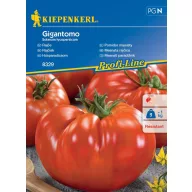
These are long-season varieties that provide continuous harvest (e.g., most greenhouse varieties and oxheart giant tomatoes).
• Determinate (Bush) varieties:
The growth of the main shoot is terminated by a flower cluster, usually after 6-12 clusters.
They generally do not require support or only minimal support, such as a tomato stake.
The fruits ripen within a relatively short period, so they are mainly suitable for open-field, industrial production and canning (e.g., Kecskeméti 549, Mobil, Kecskeméti Jubileum).
• Semi-determinate varieties:
These are intermediate between the previous two, typically stopping growth after 8-12 clusters. In the semi-determinate category, modern hybrid (F1) varieties dominate, bred for outstanding yield, earliness, and disease resistance. Some well-known varieties from domestic and international offerings: Oltena F1, Transit, Partner, Balkan F1, Bendida F1, Sultan F1.
• Dwarf (balcony) varieties:
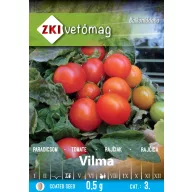
Short, stocky plants, ideal for balconies or pots (e.g., Manó, Balkonstar, Vilma).
2. Classification by intended use
• For fresh consumption (salad tomatoes):
Usually juicy, thin-skinned, excellent-tasting varieties (e.g., Ananas Noire, cocktail tomatoes, cherry tomatoes).
• For canning, processing:
Thick-fleshed, high dry matter content, less juicy, firm varieties. Most industrial varieties also have tough skins and tolerate mechanical harvesting well (e.g., San Marzano, Kecskeméti Jubileum).
• Dual-purpose:
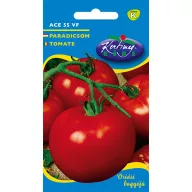
Varieties suitable for both fresh consumption and canning (e.g., Ace 55).
3. Classification by fruit (berry) shape and size
• Large-fruited varieties (Oxheart type):
Flattened, ribbed, large-fruited, often multi-locular varieties (e.g., Oxheart, Marmande, Paul Robeson).
• Medium-sized, round-fruited varieties:
The most common, standard tomato shape.
• Elongated, oval varieties:
Elongated, plum-shaped fruits (e.g., San Marzano, Banana Legs, date-shaped).
• Cocktail and cherry tomatoes:
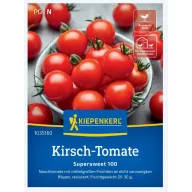
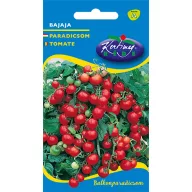
Small, typically clustered, sweet, tasty-fruited varieties (e.g., Sun Gold, Black Cherry, Goldkrone).
• Ribbed varieties:
Strongly grooved, ribbed fruits (e.g., Fóti gerezdes).
4. Classification by fruit color
Although most tomatoes come in various shades of red, special-colored varieties are becoming increasingly popular:
• Red – the most common
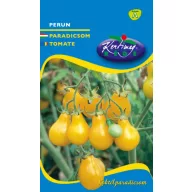
• Yellow or orange – often less acidic (Perun F1, Golden Königin)
• Pink – often sweeter, thinner-skinned varieties (e.g., Pink Thai Egg)
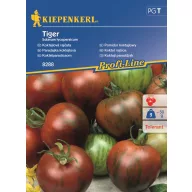
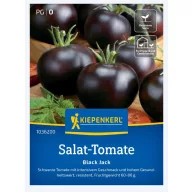
• Black / purple – their dark color is due to anthocyanin, often with a spicier aroma (e.g., Indigo Rose)
• Green – remains green when ripe, not to be confused with unripe green tomatoes (e.g., Lime Green Salad)
• Striped or variegated (e.g., Zebrino)
Frequently Asked Questions (FAQ)
1. When is the best time to sow tomato seeds?
For seedling raising (indoor sowing), tomato seeds should generally be sown 6-8 weeks before final planting. Since outdoor planting usually takes place after the risk of frost has passed, i.e., after the “Ice Saints” (mid-May), the ideal time for sowing is late February to early/mid-March. The seeds need a constant temperature above 20°C to germinate, and after sprouting, plenty of light to prevent them from becoming leggy.
2. How deep should I sow the seeds?
Shallowly, about 0.5 cm deep is sufficient, then gently cover with soil and water lightly.
3. How long does it take for tomato seeds to germinate?
Under ideal conditions (warm, moist soil), seeds germinate in 5-10 days.
4. How important is light for seedling growth?
Very important! Tomato seedlings need a bright, sunny spot, because if there is not enough light, they become leggy, their stems are weak, and they fall over.
5. Which variety should I choose if planting in a balcony garden or container?
Bushy, compact-growing cocktail or cherry tomato varieties are ideal for balconies or pots. These do not grow too large and do not require support, at most a bamboo or plastic plant support.