
Healthy, dense, and vibrant green lawn all year round
The lawn is the largest green area in gardens, parks, and sports fields, so proper nourishment is very important. Lawns grow intensively and extract large amounts of nutrients from the soil, so regular fertilization is essential. Professional landscapers, sports field maintainers, and an increasing number of private garden owners also recognize that the foundation of a beautiful green lawn and ornamental grass is well-planned and consistent nutrient replenishment. Read more »
Filter
Manufacturer
Brand
Cultures
Availability
Product status
All products in category174
Product
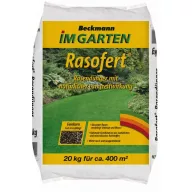


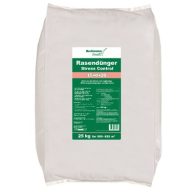


18 613 Ft

32 951 Ft

10 324 Ft


13 050 Ft

9 689 Ft

2 146 Ft
All products in category174
Product
In this category, we have collected fertilizers necessary for the nutrient supply of ornamental lawns and turfs, so you can easily find the products that best suit the needs and condition of your garden.
Advantages of lawn fertilizers
• Vivid green, healthy lawn throughout the season
• Stronger root system that better tolerates drought, heat, and trampling
• Dense turf that suppresses weeds on its own
• Longer-lasting effect with coated granule products
• Special solutions for mossy or weedy lawns
Available types of lawn fertilizers:
• Short-acting (2–3 months) fertilizers,
• Long-acting (8–9 months) coated granule fertilizers,
• Fast-acting liquid lawn fertilizers,
• Special problem-solvers, such as products combined with moss control or herbicidal agents.
Why is it worth using coated lawn fertilizers on the lawn?
The use of coated lawn fertilizers in lawn care is very advantageous for several reasons:
1. Longer-lasting effect
The coated granules dissolve slowly, so nutrients are continuously available to the lawn for up to 8–12 months. This allows for fewer fertilizations, saving time and effort.
2. Even nutrient supply
Nutrients released into the soil are gradually made available, avoiding sudden growth peaks. This way, the lawn develops more healthily, forms a denser turf, and the risk of yellowing due to excessive nitrogen burn is reduced.
3. Better root development
Gradual nutrient supply stimulates the development of deeper roots, which in the long term makes the lawn more resistant to drought and stress-inducing conditions.
4. Simpler and more economical management
Since the active ingredients are released slowly, fewer applications are needed per year. This reduces excessive fertilizer use, making it a more economical and environmentally friendly solution.
5. Stress tolerance and healthy turf
The balanced composition of coated lawn fertilizers helps the lawn cope with stress caused by heat, drought, and heavy use. The lawn thus remains dense, green, and resilient throughout the season.
When is it advisable to use liquid lawn fertilizer?
The use of liquid lawn fertilizer in lawn care is particularly advisable in certain situations, as it acts quickly, is easy to dose, and the plant can immediately absorb the nutrients.
What is it for?
1. For rapid nutrient replenishment:
If the lawn is visibly yellowing or its growth is sluggish, or if you want to quickly green it up for a garden party, liquid fertilizer provides immediately available nitrogen, potassium, and phosphorus, quickly restoring the plant’s health and leaf color.
2. For post-stress regeneration:
After drought, intensive use, or sports events that put heavy strain on the lawn, when the lawn needs quick help.
3. As supplementary fertilization:
Used alongside coated or granular lawn fertilizers, it provides a quick nutrient source until the slow-release nutrients start to take effect.
4. For newly laid turf:
To promote rapid rooting of newly laid turf, a high-phosphorus liquid lawn fertilizer that acts through the leaves provides quick help for a fast start.
5. For spot treatments:
If part of the lawn shows deficiency symptoms (e.g., yellowing caused by nitrogen deficiency), local spot treatment can be carried out by applying or watering in liquid lawn fertilizer.
Are there organic-mineral lawn fertilizers?
Yes, and in many cases, combined organic-mineral lawn fertilizer products can be very useful.
The term “organic-mineral” means that the fertilizer contains partly organic nutrients (compost, humus, organic nitrogen, organic matter) and partly mineral/fertilizer components (mineral nitrogen, phosphorus, potassium, micronutrients).
With such fertilizers, the benefits of organic fertilizers (improving soil structure, stimulating soil life, longer-lasting effect) and the advantages of mineral fertilizers (immediate, well-regulated nutrient supply) are both realized. The organic part provides slow nutrient release, stimulates soil life, and improves soil structure, while the mineral part provides rapid nutrient replenishment.
Why is it beneficial to use organic-mineral lawn fertilizer?
Double benefit
The organic components improve soil structure, increase the soil’s water and nutrient retention capacity, and stimulate the soil microbiome. Meanwhile, the mineral nutrients are immediately available to the lawn.
Longer and balanced nutrient release
The mixed nitrogen forms (fast mineral + slow-releasing organic) together ensure even growth and reduce the risk of nitrogen overdose and unnecessary nitrogen leaching into the groundwater.
Healthy and resilient lawn
Better soil structure, increased soil life, and balanced nutrient supply together result in a stronger, more durable, drought- and stress-tolerant lawn.
Simpler maintenance
For medium or large lawn areas, continuous nutrient supply can be ensured with fewer applications, so fertilization is needed less frequently.
Balanced nutrient supply
The organic part is rich in micronutrients, providing a complex and soil-friendly solution.
What should you pay attention to when choosing organic-mineral lawn fertilizer?
• Since the effect is partly slow, do not expect immediate results — it is suitable for long-term, maintenance care.
• Proper dosing is important, as excessive nitrogen release can even cause burning.
• Choose the right composition depending on the type of lawn, soil type, and use — e.g., sports fields, ornamental lawns, and play lawns have different needs.
• After application, thorough watering is recommended so that the nutrients reach the soil and the microbiological decomposition of the organic part can begin.
By choosing a lawn fertilizer appropriate for the type of lawn area, you can create a dense, resilient, and less disease-prone green space all year round. And if extra problems arise — such as moss or weeds — you will also find targeted products for those in this category.
Programmed lawn fertilization
One of the keys to successful lawn care is developing an annual lawn fertilization program. If you choose products with a 2–3 month effect, you will need at least three different types of fertilizer for optimal results:
• Spring starter: initiates growth, gives a vivid green color, restores the lawn weakened after winter.
• Summer stress reliever: helps reduce stress caused by heat, drought, or intensive use.
• Autumn-winter preparer: strengthens the roots, prepares the lawn for the cold months.
Frequently Asked Questions (FAQ)
1. When should I first fertilize the lawn in spring?
Usually at the end of March – beginning of April, when the soil temperature consistently rises above 8–10 °C.
2. Which is better: short- or long-acting lawn fertilizer?
Short-acting fertilizers give quick results, while coated, long-acting products provide even nutrient supply for up to 8–9 months. The choice depends on your needs and how the lawn is used.
3. What can I do if my lawn is mossy?
Use a targeted, moss-reducing lawn fertilizer — several such special products can be found in the category.
4. How do I use weed-control lawn fertilizer?
It can be applied from March to September, during the intensive growth period of broadleaf weeds (e.g., dandelion, clover, wood sorrel, daisy), but it is most effective in spring and early summer. It is not effective against grassy weeds! Apply to dry foliage and to frost-free but adequately moist soil. Apply at the earliest on the third day after mowing, or four days before the next mowing. For newly sown lawns, the product can be used at the earliest six months after establishment. Overseeding of worn patches can be done at the earliest eight weeks after treatment. It can be applied a maximum of twice a year. In case of heavy weed infestation, repeat the treatment after six weeks.
5. How should I put together the annual lawn fertilization program?
Spring starter → Summer stress reliever → Autumn-winter strengthener. Most people choose products with a 2–3 month effect for this, but many other combinations are possible. Read our articles on the topic or ask our expert advisors for personalized help!
6. What is the most accurate way to spread lawn fertilizers?
The simplest and most accurate method for applying coated lawn fertilizer is a lawn fertilizer spreader device. Their range includes several types of lawn fertilizer spreaders, such as hand spreaders for smaller gardens, or drop and rotary spreaders for larger lawn areas for quick application and even spreading pattern.