
The "protector" of the ornamental garden, vegetable patch, and orchard
During plant protection, nutrient application, defense against fungal or insect infestations, as well as plant care, it is often necessary to apply liquid preparations—be it water, liquid manure, spray solution, plant protection product, or foliar fertilizer—uniformly and economically to the plants. Sprayers, whether hand-pump, backpack tank, or battery-electric models, make this task significantly easier: they make spraying faster, more precise, and more convenient. Read more »


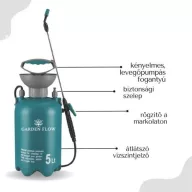


What can I find here?
Handheld sprayers (with 5–8 l tanks)
Ideal for smaller gardens, balconies, or small vegetable patches where spraying is needed less frequently or only in small amounts. The simplest and most affordable solution.
Backpack sprayers (with 8–16 l tanks)
Shoulder-strap or backpack models suitable for larger areas, orchards, or vegetable gardens. The 16-liter battery-powered backpack sprayer also belongs to this group — comfortable, relatively high capacity, and easy to use.
Battery-powered / electric sprayers
Easier work, constant pressure, less physical effort: ideal for regular gardening, viticulture, or orchard care. Modern sprayers may also feature a selection of nozzles, pressure regulation, and continuous mist or band spraying options.
Accessories and add-ons: nozzles, hoses, spray wands, filters, spare tanks, maintenance kits
These ensure that the sprayer works reliably in the long term and is suitable for all kinds of plant protection or care tasks.
What tasks is the sprayer recommended for?
• Plant protection — spraying against insects, fungi, pests, or pathogens in orchards, vegetable gardens, vineyards, ornamental plants.
• Feeding, nutrient application, foliar fertilization — for even distribution of spray solution, foliar fertilizer, or liquid nutrients.
• Weed control, weed or soil disinfection — for applying selective or general herbicides, soil or row treatment.
• Greenhouse, polytunnel, seedling care, flowerbed maintenance — for caring for and spraying small and medium plant surfaces with lightweight, small- and medium-capacity sprayers.
• For multiple tasks — suitable for both chemical and chemical-free solutions — for applying spray solution, nutrient solution, water mist, biological products, or plant conditioners.
Spraying rules – always pay attention to these!
1. Weather conditions
• Calm or light wind (max. 2–3 m/s) – in strong wind, the spray drifts, can damage other plants or be hazardous to health.
• Do not spray in direct sunlight or high heat – it can scorch the plants.
• Rain-free period – it should not rain for at least 4–6 hours so the product can take effect.
2. Use of protective equipment
Always wear:
• protective gloves,
• protective goggles,
• mask/respirator,
• protective clothing or long garments.
Spray products can be hazardous to skin, eyes, and lungs.
3. Proper mixing and dosing
• Always mix the product according to the label instructions – neither stronger nor weaker.
• Always pour the spray product into the water, never the other way around.
• Only mix as much as you will use immediately.
4. During spraying
• Keep everyone away: children, pets, bees.
• Never spray during periods dangerous to bees (pay special attention to bee-friendly technology during flowering).
• Do not smoke, eat, or drink while spraying.
5. Aftercare
• After spraying, thoroughly wash your hands and clothes.
• Clean the sprayer – this prevents clogging and residue build-up.
• Never pour unused spray solution into open water or the sewer!
6. Legal and professional regulations
• Use only authorized plant protection products.
• Home users may only purchase products available for general sale.
• Always check the usage category and restrictions on the label.
• Certain products require a plant protection license.
7. Your own and environmental safety
• Do not spray near watercourses or fish ponds.
• Make sure the spray does not reach your neighbor’s garden.
• Used packaging must be treated as hazardous waste.
Frequently Asked Questions (FAQ)
1. Which sprayer should I choose — handheld, backpack, or battery-powered?
• For small gardens, infrequent spraying → a handheld sprayer (e.g. 5–8 l) is sufficient.
• For medium-large vegetable gardens, orchards, regular work → a backpack or battery-powered sprayer is more practical due to the larger tank, continuous pressure, and mobility.
2. Why is nozzle and pressure regulation selection important when spraying?
Nozzle selection is critical — different pests, plant protection goals, or spray solution types require different spray patterns and droplet sizes. A poorly chosen nozzle can result in ineffective spraying.
3. How dangerous is it to use a sprayer — what should I watch out for?
It is important to thoroughly clean the sprayer after use — leftover spray solution can deposit on the tank wall, hose, or nozzle, which can later lead to poor efficiency or plant/soil damage.