
Professional ground cover and landscaping solutions
In this subcategory, we have collected those professional ground cover materials that are indispensable in landscaping, garden maintenance, plant cultivation, and land leveling. Agro-fabrics, geotextiles, and natural jute fabrics offer durable, reliable, and effective solutions for various tasks—whether it’s weed control, soil stabilization, or plant protection. Read more »











What can I find here?
Agrofabric – woven, UV-resistant ground cover for cultivation and weed control
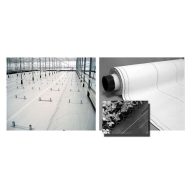
Agrofabric is a woven polypropylene (PP) ground cover reinforced with pigments and UV stabilizers. Its characteristics include high tensile strength, durability, and excellent weed control capability.
What do we recommend agrofabric for?
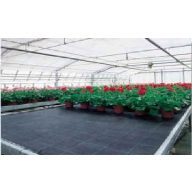
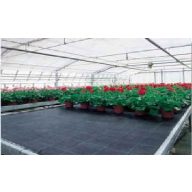
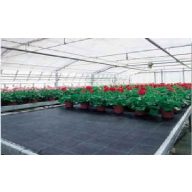
• Ground cover in greenhouses, container sites
• Preventing rooting of plants grown in pots and containers
• Weed control in beds and between rows
• Landscaping, garden paths with a suitable base layer
Advantages and properties:
• Medium water and air permeability
• Excellent heat retention and evaporation reduction
• Reduces the need for irrigation, especially during drought
• Strong, can even be walkable (thicker, higher weave density versions)
• Available in several colors (black, white), widths, and material thicknesses (usually 90–100 g/m²)
• 15×15 cm marking grid helps arrange pots
Black agrofabric is generally recommended for open field applications, white for forcing greenhouses. In open fields, it must be fixed (by covering with soil or with fixing pegs).
Geotextile – non-woven, needle-punched or heat-treated material for versatile landscaping tasks
Geotextile is a felt-like, non-woven textile made from polypropylene, which can be widely used in both landscaping and architectural, drainage tasks.
Areas of use:
• Protection of beds against weed growth
• Separation of layers during landscaping
• Creating gravel beds, underlay for walking surfaces
• Winter protection of the root zone of frost-sensitive plants
• Stabilization of pond edges, slopes
• As an alternative to natural ground cover (in case of special geotextiles)
Variants and characteristics:
• Material thickness: 50–200 g/m²
• Color: black, white, or gray
• UV-resistant and non-UV-resistant types available
• UV-resistant geotextile: does not need to be covered, lifespan 2–4 years
• Non-UV-resistant type: requires covering (bark, gravel mulch), lifespan 5–25 years
• Good thermal insulation effect
Special geotextiles:
• DuPont Plantex® Gold – double-sided (black-brown), excellent weed control, for mulch-free solutions
• Bentonite geotextile – for creating a waterproof, water-insulating layer
• Green roof textiles – water-retaining material for green roofs
• Grasstex – biodegradable, cotton-based textile with built-in grass seed mix for rapid grassing of steep slopes
Jute fabric – natural, biodegradable solution for ground cover and plant extraction
Jute fabric is a 100% natural, rapidly biodegradable textile, primarily used for:
• lifting balled plants,
• slope stabilization,
• decorative purposes,
• natural ground cover.
Material made from jute is environmentally friendly, has a rustic effect, and is an ideal choice where natural decomposition and a harmonious appearance are required.
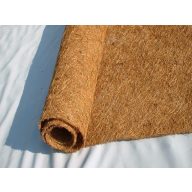
In addition to jute fabric, coconut mats, reed mats, and other biodegradable ground covers are available, which are excellent alternatives for nature-friendly landscaping projects.
Frequently Asked Questions (FAQ)
1. What is the main difference between agrofabric and geotextile?
Agrofabric is a woven, strong, UV-resistant material mainly used in cultivation environments and for weed control. Geotextile is a non-woven, felt-like, needle-punched or heat-treated product that can be used in a versatile way for layer separation, soil stabilization, and mulching.
2. Which should I choose against weed growth?
Both materials are effective, but:
• in growing facilities, under potted plants, agrofabric is recommended,
• for mulched beds, gravel beds, geotextile is the better choice.
3. Does agrofabric need to be fixed?
Yes. For wind protection, it is recommended to cover it with 15–20 cm of soil or fix it with metal/plastic pegs.
4. How durable is geotextile?
Depending on the type, its lifespan can be 2–25 years. Non-UV-resistant versions require covering, so they retain their quality for a longer time.
5. Does jute fabric really decompose?
Yes, jute fabric is made entirely from natural materials and gradually decomposes under environmental effects, making it an ideal environmentally friendly solution.